“If God credits you, nobody can discredit you.”
This statement reminds us that God’s judgement of a person is not based on human opinion, past mistakes or the labels people have placed on them. When God sees something genuine in a person, He can bring it to light, regardless of what others think.
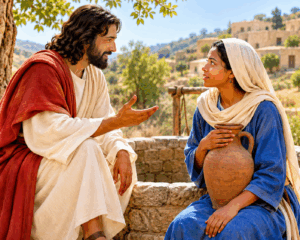
The biblical story of the Samaritan woman who met Jesus at the well in Sychar is a clear example of this truth.
THE WOMAN AT THE WELL: JOHN 4:5–30
Jesus met the Samaritan woman at Jacob’s well. During their conversation, He revealed that He knew her life and the truth about her marital history.
In John 4:17–18, Jesus said:
“You have well said, I have no husband: For thou hast had five husbands; and he whom thou now hast is not thy husband.”
Jesus did not ignore her past. He knew her mistakes and the circumstances surrounding her life. Yet, He did not allow her past to become the final definition of who she was.
The woman could have seen herself only through the eyes of her past. She could have allowed shame, disappointment and the judgement of society to silence her. But Jesus saw beyond her mistakes.
He recognised her willingness to engage with the truth. He revealed Himself to her as the Messiah, the Christ.
In John 4:25–26, the woman spoke about the coming Messiah, and Jesus answered:
“I that speak unto thee am he.”
This was a significant revelation. Jesus openly identified Himself to her as the Christ.
The woman believed what she had heard. She left her waterpot, went into the city and told the people:
“Come, see a man, which told me all things that ever I did: is not this the Christ?” (John 4:29).
Notice what happened.
The woman who had encountered Jesus did not remain silent. She became a witness to the people of her city.
Her encounter with Christ changed the direction of her testimony. Instead of allowing her past to keep her away from people, she went to them with a message about Jesus.
John 4:39 says:
“And many of the Samaritans of that city believed on him for the saying of the woman, which testified, He told me all that ever I did.”
Her testimony became a means through which others came to believe in Jesus.
GOD SEES BEYOND YOUR MISTAKES
The Samaritan woman’s story teaches us that God knows our weaknesses, but He is also able to recognise our faith and willingness to respond to Him.
God does not need us to pretend that we have never made mistakes. He calls us to acknowledge the truth, believe in Him and respond to His word.
Romans 5:8 says:
“But God commendeth his love toward us, in that, while we were yet sinners, Christ died for us.”
God’s
The Samaritan woman did not become a witness because her past was flawless. She became a witness because she encountered Jesus and believed in Him.
WHEN GOD CREDITS YOU, HUMAN OPINION CANNOT CANCEL HIS PURPOSE
People may remember your past. They may judge you by your mistakes or refuse to acknowledge the changes taking place in your life.
But the most important question is: What does God see in you?
In 1 Samuel 16:7, the Lord said to Samuel:
“For the LORD seeth not as man seeth; for man looketh on the outward appearance, but the LORD looketh on the heart.”
God sees what people may overlook. He knows the heart, the motive and the genuine faith of a person.
However, this does not mean that God approves of dishonesty or wrongdoing. His grace calls us to repentance and transformation.
The Samaritan woman encountered the truth about herself, but she also encountered the Saviour who offered her living water.
WHAT IS YOUR RESPONSE TO GOD’S CALL?
The Samaritan woman believed Jesus and trusted what He revealed to her. Her response was to go and tell others about Him.
John 4:28–29 records that she left her waterpot and went into the city to invite the people to meet Jesus.
Her faith produced action.
James 2:17 says:
“Even so faith, if it hath not works, is dead, being alone.”
If you believe God, your faith should influence your choices, your conduct and your willingness to obey His word.
Do not allow your past to stop you from responding to God’s call. Equally, do not use God’s grace as an excuse to remain in wrongdoing.
The Samaritan woman did not keep the message to herself. She shared what she had discovered.
When God credits you, nobody can discredit the work He is doing in your life.
The Samaritan woman met Jesus at a well, but she left with a message. She came to draw water, but she became a witness to the people of her city.
Her story reminds us that our past does not have to be the final chapter of our lives when we encounter Christ.
God knows your past. He sees your present. He also knows what your faith can produce when you trust and obey Him.
Believe Him. Trust His word. Respond to His call.
As Jesus said in John 4:14:
“But whosoever drinketh of the water that I shall give him shall never thirst.”
When you encounter Christ, your past may be part of your testimony, but it does not have to determine your future.