



Life presents us with situations that sometimes go beyond our human understanding and abilities. There are moments when our resources are exhausted, our strength becomes insufficient and the solutions available to us seem limited. However, the story of the wedding at Cana reminds us that when Jesus is invited into our situations, what appears impossible can become possible.
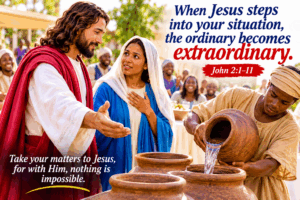
At the wedding in Cana of Galilee, a serious problem arose when the wine ran out. In those days, running out of wine during a wedding celebration was a matter of great embarrassment for the hosts. The celebration was still going on, but an important provision had been exhausted. Fortunately, Jesus was present. What could have ended in disgrace became an opportunity for the manifestation of God’s power.
When Mary discovered that there was no more wine, she took the matter directly to Jesus. She did not begin by complaining or spreading the news among the guests. Instead, she brought the situation before the One who could make a difference. Jesus eventually instructed the servants to fill the waterpots with water, and through His divine power, the water became wine.
This miracle teaches us an important lesson: never underestimate what God can do with what you consider insignificant. The water was ordinary, but when Jesus intervened, it became something extraordinary. The same God who transformed water into wine is still able to intervene in the affairs of humanity.
ALWAYS MAKE ROOM FOR JESUS
One important lesson from this account is the need to make room for Christ in every area of our lives. We should not remember God only when we encounter difficulties. We must learn to involve Him in our daily decisions, marriages, families, businesses, relationships and future plans.
Some people become so comfortable when life is going well that they gradually forget the importance of their relationship with God. They only remember to pray when challenges arise. However, our relationship with God should not be built around emergencies. Prayer and fellowship with Him should be part of our everyday lives.
When we commit our plans and decisions into God’s hands, we acknowledge that human wisdom and resources have limitations. We may have the education, connections, experience and financial resources to accomplish certain things, but there are situations beyond our control.
Human ability has limits, but God’s power has no limits. Where human strength becomes insufficient, we must learn to depend on God’s grace and direction.
As Luke 1:37 reminds us, nothing is impossible with God.
TAKE YOUR MATTERS TO JESUS, NOT THE GOSSIP ROOM
Mary’s response at the wedding teaches us where to take our concerns. When the wine finished, she went to Jesus. This is an important principle for every believer.
When challenges arise in our homes, marriages, workplaces, businesses and personal lives, our first response should be to seek God’s wisdom rather than allow complaints, gossip and unnecessary arguments to take over.
This does not mean we should reject wise counsel or refuse to seek appropriate help. Rather, we must recognise God as our ultimate source of wisdom and direction.
There is a difference between discussing a problem with people who can offer genuine assistance and spreading it among those who have no intention of helping. Not every situation requires public discussion. Some matters require prayer, patience, wisdom and the right approach.
Learn to take your burdens to God. Present your requests before Him rather than allowing anxiety and bitterness to control your thoughts.
OBEDIENCE IS AN IMPORTANT PART OF FAITH
After Mary brought the matter to Jesus, she gave the servants an instruction that remains relevant to Christians today:
“Whatever He says to you, do it” (John 2:5).
This statement carries a powerful message about obedience. It is not enough to believe that Jesus can change our situations; we must also be willing to obey His instructions.
The servants could have questioned why Jesus was asking them to fill waterpots when the problem was a shortage of wine. Nevertheless, they followed His instructions, and the miracle took
place.Sometimes, the instructions God gives us may not immediately make sense to our human reasoning. However, genuine faith requires trust and obedience.
It is contradictory to claim that we love God while deliberately refusing to follow His teachings. Knowing the truth is not the same as living by the truth. A Christian must be willing to turn away from wrongdoing and walk according to God’s Word.
We cannot continually acknowledge our sins while deliberately making plans to continue in them. God’s grace is available to transform us, not to give us permission to remain in disobedience.
UNDERSTANDING CHRIST AND TRUSTING HIS WORD
To develop a meaningful relationship with Christ, we must make an effort to understand His teachings and follow His instructions.
Jesus is the truth, and His Word remains dependable. Human opinions may change, circumstances may change, and people’s promises may fail, but God’s Word does not lose its authority.
The account of the rich man and Lazarus in Luke 16:19–31 also reminds us of the importance of listening to God’s Word while we have the opportunity. The rich man’s earthly possessions could not secure his eternal destiny. His story demonstrates that material wealth is not a substitute for obedience to God.
We must therefore examine our lives and ensure that our actions reflect the faith we profess.
DO NOT DESPISE THE DAYS OF SMALL BEGINNINGS
Another important lesson from the wedding at Cana is that God can use ordinary things to accomplish extraordinary purposes.
The servants had water. They did not have the wine needed to save the celebration, but they had something they could offer. Jesus used what was available to demonstrate His power.
This reminds us not to despise our little beginnings. Do not look down on the small opportunities, resources or responsibilities entrusted to you. What appears insignificant today may become the foundation of something greater tomorrow.
Rather than complain about what you do not have, learn to be faithful with what is available to you. God can work through little beginnings and use them to accomplish purposes beyond human expectations.
GOD CAN RESTORE WHAT HAS BEEN LOST
The miracle at Cana also reveals Christ’s ability to bring restoration. The wine had finished, but the celebration did not have to end in disgrace because Jesus was present.
There are situations in life where people feel that their opportunities have expired, their strength has diminished or their expectations have been disappointed. However, we must not conclude that the end of our human resources means the end of God’s ability to intervene.
God’s restoration does not always mean that everything will happen exactly as we expect. Sometimes, He changes our circumstances; at other times, He gives us the strength, wisdom and direction to face them.
The important thing is to remain faithful and trust His guidance.
CONCLUSION: MAKE JESUS THE CENTRE OF YOUR LIFE
The lesson from John 2:1–11 goes beyond the miracle of turning water into wine. It teaches us the importance of Christ’s presence, faith, obedience, prayer and total dependence on God.
Do not wait until your resources are exhausted before you seek God. Do not involve Him only when life becomes difficult. Make Him part of your everyday life.
Commit your family, marriage, career, business, plans and decisions into His hands. When you encounter challenges, take them to Him in prayer. When He gives you instructions through His Word, be willing to obey.
Remember that human resources have limitations, but God’s power is unlimited.
Where human ability ends, God’s power is still at work. What is impossible with man is possible with God.
May we never become so occupied with the blessings of life that we forget the One who gives them. May Christ remain at the centre of everything we do, in Jesus’ name. Amen.