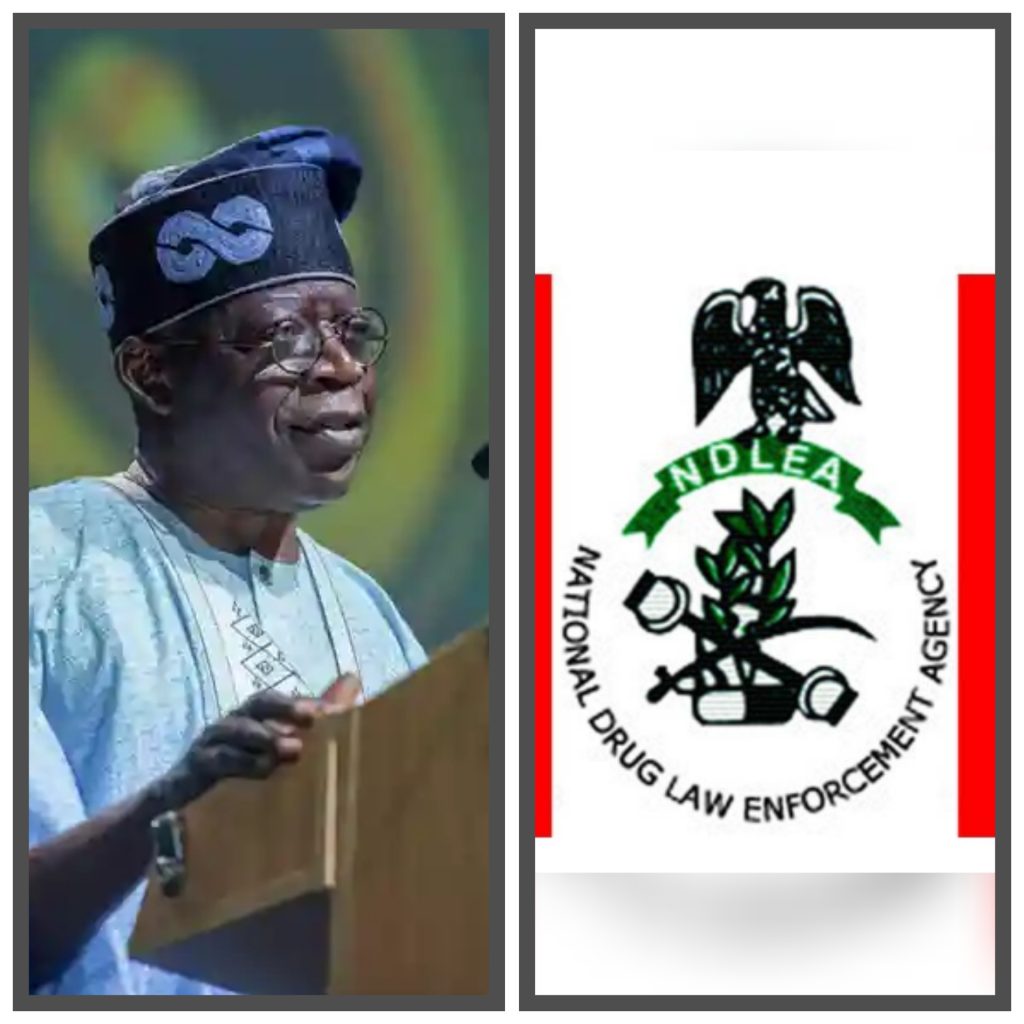
The development was made public on Thursday during a plenary session in the House of Representatives when the President’s formal communication was read aloud.
In his letter, President Tinubu invoked Section 58(4) of the 1999 Constitution (as amended), explaining that the bill contains a controversial provision that permits the NDLEA to retain a portion of the proceeds from drug-related criminal convictions. He emphasized that this clause directly contradicts established financial protocols.
“All proceeds of crime are to be paid into the Federal Government’s Confiscated and Forfeited Properties Account,” Tinubu stated. “Any disbursement to an agency—whether the NDLEA or others—must be sanctioned by presidentialapproval, and subject to the concurrence of both the Federal Executive Council and the National Assembly.”
The President stressed that the current framework ensures accountability, transparency, and multi-tier oversight, adding that there was no compelling justification for the deviation proposed by the legislature.
The NDLEA Bill, which had passed both the Senate and House of Representatives earlier this year, sought to expand the powers and operational independence of the anti-drug agency. However, this rejection signals that significant amendments will be required before it can become law.
Analysts believe the President’s move underscores the administration’s stance on preserving centralized fiscal control and strict adherence to constitutional checks.
This marks one of the rare instances where President Tinubu has exercised his veto powers on a high-profile legislative proposal since taking office in 2023.