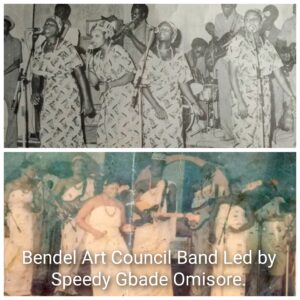
Long before Edo and Delta states existed as separate entities, there was Bendel State, and at the heart of its cultural life was the Bendel Arts Council, an institution that helped shape the performing arts scene in the old Mid-Western region. At the center of that story was a man named Speedy Gbade Omisore, whose name has become tied to one of the more memorable chapters in Nigerian regional cultural history.
Gbade Omisore wasn’t just an administrator sitting behind a desk. He was a musician through and through, leading the Bendel Arts Council’s own performing band as its lead guitarist. Under his leadership, the group recorded and released an album titled “Songs of Bendel Vol. One,” featuring a full lineup of talented musicians and vocalists who brought Bendel’s cultural sound to a wider audience.
The troupe included:
Speedy Gbade Omisore – Leader, Lead Guitar
Daniel Uwadiae – Maracas
Emmanuel Osagie – Piano, Organ
Sheddy Agbagbara – Rhythm Guitar, Arranger, Producer
Bright Umeana – Slit Drum
Sunny Anifowose – Bass Guitar
Ikponmwosa Erebor – Congas
Pius Ighodaro – Drums
Mohammed Ojiefor – Handclaps
Bridget Idele – Vocals
Eddie Obazee – Vocals
Gladys Nwadiodor – Vocals
Pat Ochei, Petra Iwedike, Stella Omodon, Theresa Osamor – Chorus
The album carried seven songs, each written by different members of the troupe, showcasing the collaborative spirit behind the project:
Alele – written by Bridget Idele
Ogom – written by Petra Iwedike and Theresa Osamor
Nwachuni – written by Stella Omodon
Obosaye – written
by Eddie ObazeeIbe Anyi – written by Gladys Nwadiodor and Petra Iwedike
Ukpo N’ikoko Yogo – written by Bridget Idele
Onye Dele Ontajele / Mbodombo – written by Gladys Nwadiodor
For years, the council and its troupe stood as a symbol of the state’s investment in arts and culture, at a time when many Nigerian states were still figuring out how to formalize their support for the creative sector. The record itself, released on the Bendel Arts Council’s own label, remains a piece of Nigerian musical heritage today, blending funk, soul, and traditional African styles into a sound distinctly rooted in Bendel’s identity.
The legacy of the Bendel Arts Council lived on well after this recording. In 1991, the council published a documentation titled “Window on Bendel Arts Council (Vol. Two)” in Benin City, evidence that the institution continued to record and preserve its own history.
When Bendel State was eventually split into Edo State and Delta State in 1991, the cultural responsibilities once carried by the Bendel Arts Council were absorbed into new state-level institutions, eventually giving rise to what is now the Edo State Council for Arts and Culture.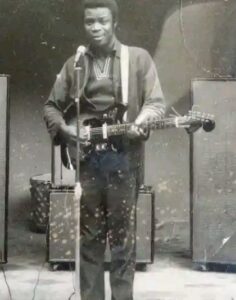
Today, Speedy Gbade Omisore’s story stands as a marker of a golden era in Bendel’s cultural life, a time when state-backed art and music brought communities together through sound and shared identity.
#BendelArtsCouncil #SpeedyGbadeOmisore #BendelState #EdoState #DeltaState #NigerianMusicHistory #MidWesternRegion #NigerianCulture #NigerianHeritage #BeninCity #AfricanMusic #CulturalHistory #WawaReporters