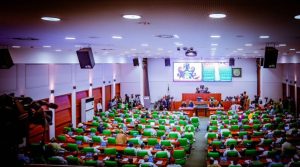
The House of Representatives has taken a step towards establishing a Federal College of Nursing and Midwifery in Ifako/Ijaiye Local Government Area of Lagos State.
The bill, which passed its second reading during Wednesday’s plenary, is aimed at expanding opportunities for nursing and midwifery education while addressing the shortage of healthcare professionals in Nigeria.
Sponsored by the lawmaker representing Ifako/Ijaiye Federal Constituency, Benjamin Olabinjo, the proposed institution is expected to provide specialised training, research and continuing education in nursing, midwifery and related fields.
Leading the debate on the bill, Olabinjo said the establishment of the college would help increase the number of qualified nurses and midwives available to hospitals and healthcare facilities across the country.
He expressed concern over the growing shortage of healthcare personnel, noting that the migration of trained professionals to countries such as the United Kingdom, Canada and the United States had placed additional pressure on Nigeria’s healthcare system.
According to him, the country is losing trained nurses and midwives faster than it can replace them, making it necessary to expand training facilities.
The lawmaker said Lagos, as one of Nigeria’s most populous states, needed more institutions to train healthcare professionals to meet the increasing demand for their services.
He added that the limited number of federally accredited training institutions had made it difficult for many aspiring nurses and midwives to gain admission, despite the growing need for skilled personnel.
Under the proposed legislation, the college would offer certificates, diplomas, degrees and post-basic qualifications in nursing, midwifery and related specialities.
It would also have the authority to admit students, conduct examinations, undertake research and organise academic programmes, including
The proposed institution would operate with a governing council, a School of Nursing and a School of Midwifery, alongside principal officers responsible for its academic and administrative activities.
Olabinjo said the college would contribute to improving healthcare delivery, particularly maternal and child health services, by producing more skilled professionals.
He noted that increasing the number of trained midwives could help reduce preventable maternal and infant deaths, especially in communities where access to skilled birth attendants remained limited.
Beyond healthcare, the lawmaker said the proposed college would create educational and employment opportunities for young people in Ifako/Ijaiye and other parts of Lagos State.
He added that the institution would provide jobs for lecturers, administrators and other support staff while boosting economic activities in the host community.
Olabinjo urged his colleagues to support the bill, arguing that investment in healthcare professionals was essential to improving the country’s health system.
Following its second reading, the bill is expected to be referred to the relevant committee of the House for further legislative consideration.
If passed by the National Assembly and signed into law by the President, the proposed legislation would provide the legal framework for establishing the Federal College of Nursing and Midwifery in Ifako/Ijaiye.
The move comes amid continued concerns over the shortage and uneven distribution of healthcare workers in Nigeria, as the migration of trained professionals to countries with better pay and working conditions continues to affect the sector.
The proposed college is expected to help strengthen the country’s capacity to train nurses and midwives, although its eventual impact will depend on funding, accreditation, staffing and effective implementation.
#WawaReporters #NursingEducation #LagosNews #HouseOfRepresentatives #Healthcare #NigeriaNews #NursingAndMidwifery #Education