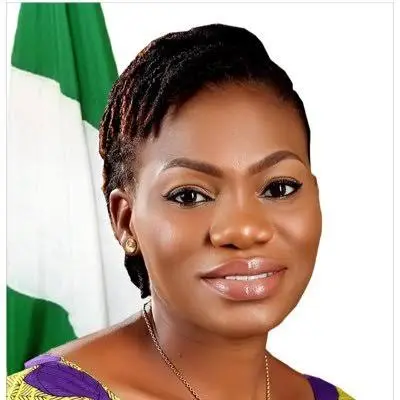
Speaking at a high-level event in Abuja on Monday themed “A New Chapter for Nigeria: Advancing Women Political Representation”, Essiet lamented that women remain shut out of politics due to entrenched patriarchal norms, economic disparities, and deep-seated cultural stereotypes.
“Politics in Nigeria is expensive, and women are often left out when the money is shared,” she stated, adding that the persistent mindset questioning women’s leadership capacity continues to deter progress.
Essiet used the occasion to advocate strongly for the reintroduction and passage of the Gender Reserved Seats Bill — a legislative proposal aimed at reserving a minimum quota of elective positions exclusively for women across federal and state levels.
“This bill is not about charity. It’s about justice, inclusion, and enabling half of Nigeria’s population to fully participate in national development,” she stressed.
Describing the bill as a vital springboard rather than a restriction, Essiet noted that the initiative would not limit women’s ambitions but create a more enabling environment for broader political participation.
“These extra seats are not ceilings — they’re springboards. Women can still contest every open seat. This just creates a more supportive structure for entry and growth.”
Unlike previous gender-related bills that failed to pass in the National Assembly, Essiet said this renewed effort takes a decentralised approach, actively engaging State Houses of Assembly and Local Government Councils.
“We’re not leaving this to Abuja alone. We are engaging State Assemblies and Local Councils as well,” she affirmed.
Drawing attention to the staggering gender imbalance atthe grassroots level, she posed a direct challenge to the public:
“How many women are councillors in your LGA? How many are in state assemblies? Very few. That’s the problem. And that must change.”
Rejecting the notion that gender equity is a niche or women-only issue, Essiet declared that inclusive governance is essential for national progress.
“You cannot talk about national development while leaving half your population behind. Gender representation is not a woman’s issue — it is a governance and development issue,” she concluded.
Also present at the event was the Convener of the Reserve Seats for Women Campaign, Osasu Ogwuche, who made a heartfelt plea to President Tinubu.
“When this bill reaches your desk before the end of the year, please sign it — and sign it not just with your ink, but with vision,” she urged.
Describing the campaign as a foundational step towards nation-building, Ogwuche stressed that equitable leadership benefits everyone.
“This is not just a bill. It’s a blueprint for the Nigeria we are called to become, where boys and girls grow up knowing leadership belongs to all, regardless of gender.”
She also emphasised the bill’s affordability, pointing out that its implementation would require just “a mere one per cent of the national budget,” yet yield far-reaching improvements in governance quality.
“If Nigeria truly wants to compete on a global scale, we cannot afford to keep leaving half of our brains behind,” Ogwuche warned.
The forum ended with a renewed call on legislators, civil society, and the Nigerian public to push for the bill’s speedy passage, positioning it as a turning point in Nigeria’s democratic journey.