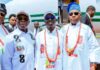




Boer, who was born and raised in Nigeria but holds Dutch citizenship, expressed his concerns in a LinkedIn post on Friday, insisting that Nigeria remains an integral part of his identity regardless of where he lives or works.
Badenoch, born in the UK to Nigerian parents, recently stated on the Rosebud podcast with Gyles Brandreth that she no longer identifies as Nigerian. She revealed she had not renewed her Nigerian passport in over 20 years, despite her ancestry and time spent in the country.
“I’m Nigerian through ancestry, by birth, despite not being born there because of my parents, but by identity I’m not really. I know the country very well, I have a lot of family there, and I’m very interested in what happens there,” Badenoch said.
In response, Boer wrote:
“As a proud Nigerian-born and raised Dutchman, I claim Nigeria anywhere and everywhere. From boardrooms in Amsterdam to classrooms in Michigan and hospitals in Guyana, Nigeria is always in my story — not just as heritage, but as part of the engine that drives who I am.
— has chosen to disassociate from Nigeria, saying she no longer identifies as Nigerian.”
So, I found it deeply problematic to hear that UK opposition leader, Kemi Badenoch — born in the UK to Nigerian parents
Citing global leaders such as former US President Barack Obama and UK Prime Minister Rishi Sunak, Boer argued that public figures rarely renounce their ancestral heritage, even when their political careers are rooted elsewhere.
“I’ve never heard Obama disavow Kenya or Indonesia — even while running for president of the United States. I’ve never heard Sunak disassociate from his Indian or East African roots. Identifying with Nigeria has never been more on trend in the UK — not for optics, but because the impact of Nigerians across British life is too real to ignore.”
Boer listed prominent Britons of Nigerian heritage who have excelled internationally — from Bukayo Saka and Chiwetel Ejiofor to Anthony Joshua and Ben Okri — and highlighted Nigerian-founded companies such as Helios Investment Partners, IHS Towers, Seplat Energy, and GTBank, which contribute significantly to the UK economy.
He stressed that it is possible to criticise a country without renouncing it:
“Choosing to distance oneself from Nigeria isn’t neutral. It says something. For those of us who know the complexity, beauty, pain, and power of our homeland — it stings. You can critique a country without renouncing it. That’s what leaders do. That’s what representation demands.”
Boer concluded:
“I’ll always claim Nigeria. Every day, everywhere. Because it’s still shaping some of the best stories — and people — the UK and the world have to offer.”