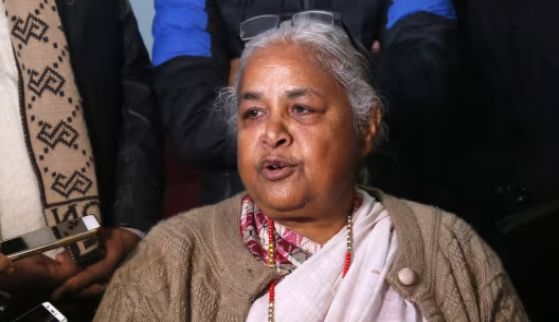

Karki, 73, the country’s first woman to serve as chief justice, was sworn in on Friday by President Ram Chandra Paudel during a brief ceremony at the presidential palace in Kathmandu. Dressed in a striking red sari, she bowed repeatedly with hands pressed together in the traditional greeting, but did not make a speech.
“Congratulations! We wish you success, wish the country success,” President Paudel said as diplomats and former leaders looked on.
The Himalayan nation of 30 million has been plunged into turmoil after security forces attempted to crush youth-led rallies against corruption earlier in the week. At least 51 people were killed in what observers described as the worst violence since the end of the Maoist civil war and the abolition of the monarchy in 2008.
The army was forced to retake control of the streets, imposing curfews after parliament, key government buildings, and even a Hilton Hotel were torched on Tuesday. More than 12,500 prisoners escaped from jails amid the chaos, with police confirming that most remain at large.
Outgoing prime minister KP Sharma Oli, 73, resigned shortly before parliament was set ablaze. His current whereabouts remain unknown.
The appointment of Karki followed two days of intense negotiations between President Paudel, army chief General Ashok Raj Sigdel, and representatives
of the youth protest movement known as Gen Z. Thousands of activists had debated the transition on Discord, ultimately nominating Karki as their preferred choice for leader.“It is a moment of victory… finally the power vacuum has ended,” said Amrita Ban, one of the young protesters.
On Instagram, youth collective Hami Nepal declared: “We did it. Honour the lives of those who sacrificed themselves for this moment.”
According to the World Bank, one in five Nepalis aged 15–24 are unemployed, with the country’s GDP per capita standing at just $1,447. The protests, triggered by a government ban on social media, quickly escalated into wider demands for reform and accountability.
Police confirmed that at least 21 of the victims were protesters killed during Monday’s violent crackdown. Demonstrators were later seen brandishing looted rifles, though the army says more than 100 weapons have since been recovered.
For many ordinary residents of Kathmandu, life remains tense under curfew. “I was very afraid and stayed locked inside with my family,” said Naveen Kumar Das, a painter-decorator, as he hurried to stock up on essentials during a brief lifting of restrictions.
Yet, amid the uncertainty, many protesters believe a turning point has arrived. “We started this movement so we could make a better Nepal,” said 24-year-old James Karki, smiling despite the risks.
A new council of ministers is expected to be formed in the coming days, as Nepal charts an uncertain but historic new chapter under its first female prime minister.