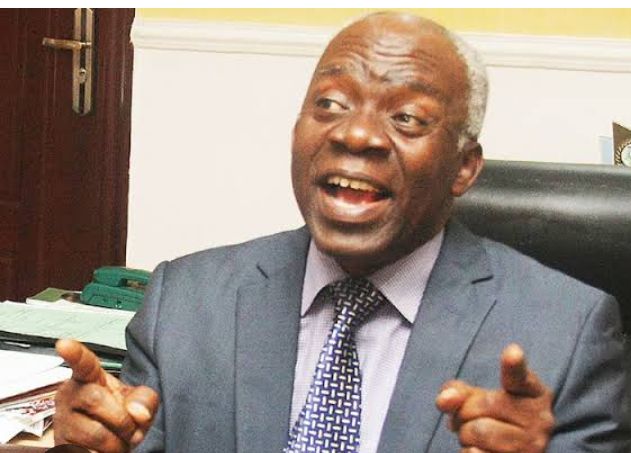

Falana, who was a prominent voice during the 2012 Occupy Nigeria protests against former President Goodluck Jonathan’s attempt to remove subsidy, argued that Tinubu’s policy has only worsened the economic suffering of ordinary citizens.
Speaking on Channels Television’s Politics Today on Sunday, the fiery advocate reminded Nigerians that the subsidy debate was not new but rooted in decades of prescriptions from the International Monetary Fund (IMF) and the World Bank—policies he said have consistently impoverished developing nations.
“I have always been against fuel subsidy removal since 2012. No country in the world has abolished subsidies completely. Even leading Western nations such as the United States, the United Kingdom and France continue to subsidise electricity, agriculture, and other critical sectors of life,” he declared.
Falana accused the Bretton Woods institutions of dictating Nigeria’s economic direction, pointing to both subsidy removal and the devaluation of the naira. He urged Tinubu to resist such external pressures and instead chart an independent, people-centred economic course.
According to him, the twin policies of naira devaluation and
subsidy removal have fuelled social tension across the country.“We asked the government to muster the courage to tell these Western imperialist institutions that no country has succeeded by following their prescriptions. You cannot devalue the currency, dollarise the economy and simultaneously remove subsidies. It is damaging the economy,” Falana cautioned.
The activist further condemned the growing dollarisation of Nigeria’s economy, faulting the president’s penchant for gifting sportsmen cash in foreign currency. He stressed that under Section 20 of the Central Bank Act, the naira remains Nigeria’s sole legal tender and rejecting it amounts to a criminal offence.
Falana lamented that school fees, properties, bills and even bribes are now frequently transacted in dollars, warning that this practice was eroding the economy’s stability.
As a remedy, he advised the federal government to consider full membership of BRICS—the economic bloc of Brazil, Russia, India, China and South Africa, which has since expanded. He argued that the grouping provides an alternative platform to reduce dependence on the dollar and Western financial institutions.
“So, we must strengthen the naira against the dollar. You cannot run a stable economy that serves the people while dollarising transactions and undermining your own currency,” Falana emphasised.