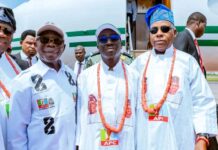

The much-anticipated inauguration, originally scheduled to hold at the Adams Oshiomhole Labour House in Benin, was abruptly disrupted when the venue was barricaded by security personnel. This forced national labour leaders to relocate the event to the Academic Staff Union of Universities (ASUU) Secretariat within the University of Benin’s Ugbowo campus—only for that location to be compromised as well, prompting a final move to an undisclosed venue where the event was quietly but successfully held.
State Assembly Pushes Back
Just two days earlier, on Tuesday, the Edo State House of Assembly passed a resolution advising the NLC to halt its inauguration plans and instead work with Comrade Bernard Egwakhide, who some factions recognise as the state chapter’s leader.
However, the NLC’s national leadership rejected this position outright. The union had already dissolved the previous leadership of the Edo State chapter, declaring its intention to install a caretaker team to manage the affairs of the congress pending new elections.
According to the NLC, the decision to dissolve the chapter’s leadership came after extensive consultations with the newly sworn-in Edo State Governor, Mr Monday Okpebholo. The governor, it was alleged, made it clear he would not cooperate with the embattled former chairman, Comrade Olaye, citing issues that “contradict labour laws and global best practices.”
Locked Out and Locked Down
Despite the state government’s resistance and alleged non-cooperation, labour leaders arrived in Benin determined to carry out their mission. But as dawn broke on Thursday, their plans encountered a major obstacle: the Adams Oshiomhole Labour House—named after the former governor and unionist—was under lock and key, guarded by a heavy security presence including police and unidentified individuals in civilian clothing.
Eyewitnesses described a tense atmosphere around the Labour House, as delegates from neighbouring states, unionists, and media personnel were denied access to the premises.
“It was embarrassing,” said Comrade Augustine Igben of the Maritime Workers Union. “This is a union matter, not a civil disturbance. Why deploy armed security to prevent a peaceful inauguration? I came to show solidarity, but I was not even allowed to pass. Where am I supposed to go from there?”
Quick Thinking, Secret Inauguration
Faced with a hostile environment, the NLC leadership quickly adapted. Led by Comrade Oluwole Sunday, the delegation initially moved to the ASUU Secretariat within the University of Benin—a venue they hoped would be
safer and more neutral.But the information was soon leaked, raising concerns of another disruption. In a swift and strategic pivot, organisers relocated the event a second time—this time to an undisclosed venue. There, the new Caretaker Committee was quietly inaugurated in the presence of select stakeholders and national labour executives.
Speaking during the brief but significant ceremony, Comrade Oluwole charged the new committee with the responsibility of restoring order, unity, and legitimacy within the Edo State chapter of the union. He called on the committee, led by Professor Igbafen, to urgently organise fresh elections and resolve all lingering disputes.
National vs State: A Power Tug-of-War
The unfolding events in Edo highlight a deepening power struggle between the NLC’s national headquarters and state-level political actors. While the NLC insists on its constitutional right to restructure its chapters as needed, the involvement of the State House of Assembly and the state government has raised questions about political interference in internal union affairs.
Critics argue that the state’s involvement in this matter—particularly the reported refusal to release the Labour House keys and the deployment of security forces—undermines the independence of the labour movement. Others view the NLC’s insistence on removing the previous leadership as a necessary step toward cleansing the system and restoring credibility to its state chapters.
What Lies Ahead for Edo Labour?
With Professor Monday Igbafen now officially at the helm of the caretaker committee, expectations are high. The new team is tasked with stabilising the chapter, addressing the internal wranglings that led to its dissolution, and paving the way for credible elections.
However, the road ahead may be bumpy. Factions loyal to the ousted chairman and those supporting Bernard Egwakhide remain active and vocal. The political undercurrent cannot be ignored either, especially in a state with a history of strong labour activism and union-rooted political figures.
Still, for many observers, the NLC’s decision to proceed with the inauguration—despite the odds—sends a strong signal about the resilience and autonomy of organised labour in Nigeria.
The Edo NLC crisis may not yet be over, but Thursday’s inauguration marked a significant milestone in the union’s efforts to regain control and restore integrity within its ranks. With political forces swirling around, labour leaders must now tread carefully, building bridges while asserting their rightful independence.
Whether the new committee can unify the fractured chapter and regain the trust of Edo workers remains to be seen. But for now, one thing is clear: the labour house may have been locked—but the labour spirit is far from broken.