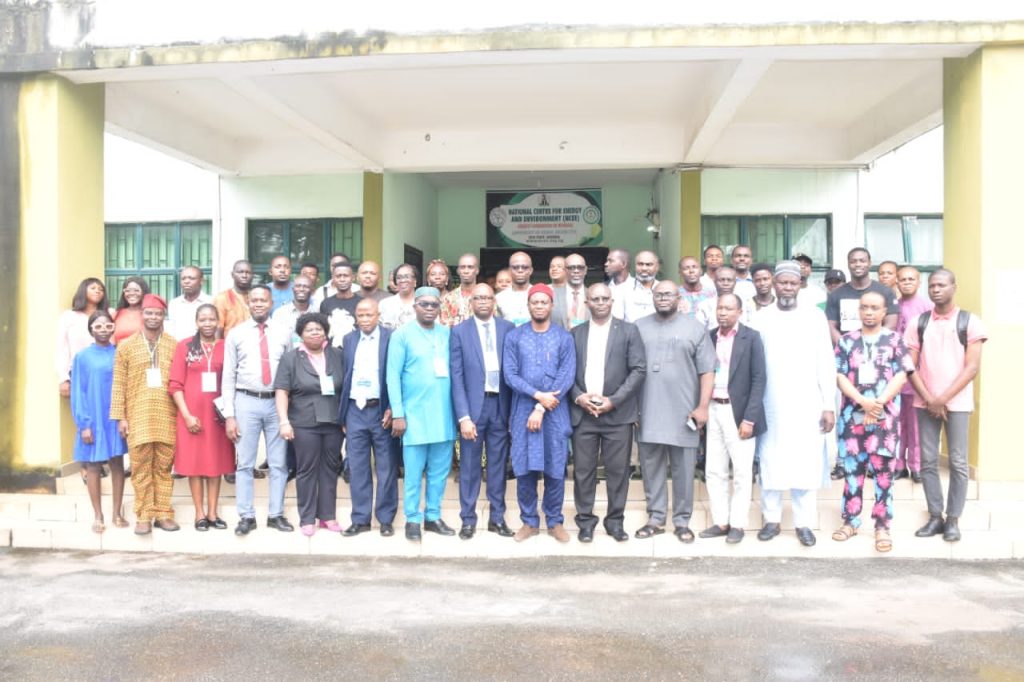
It was also established that 30% of Nigerians have no access to energy and therefore rely on traditional energy sources (firewood, charcoal, dung and crop residues) for their cooking and production activities which do compromise the social and economic conditions of the users.
Dennis Igbinomwanhia,a Professor of Design and Manufacturing Engineering and Director, National Centre for Energy and Environment, Energy Commission of Nigeria,
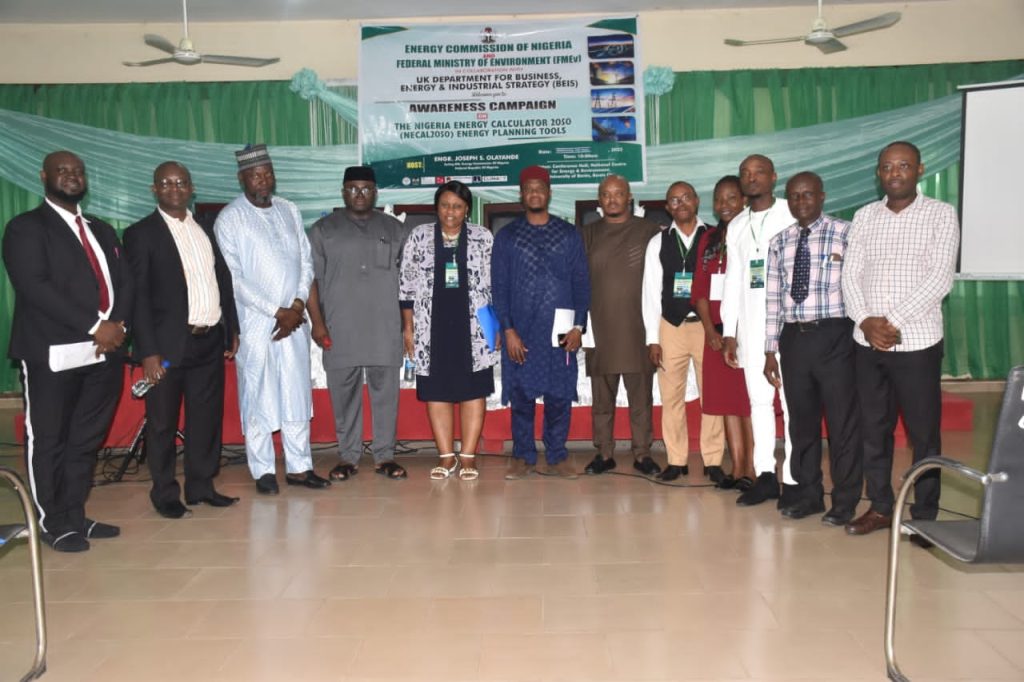
University of Benin, Benin City while delivering a Keynote address at an awareness workshop titled: “Nigerian Energy Calculator 2050, Energy Tools,” said that Integrated Energy Design( IED) is essential in achieving energy security, which is essential to all human activities and, indeed critical to social and economic development, adding that Its availability, accessibility and affordability determines the rate and state of development.
He said that Nigerian Greenhouse Gas Emissions in 2014 were 492.44 million metric tons of carbon dioxide equivalent (MtCO2e), totaling 1.01 percent of global GHG emissions,but that the country is working to reduce it by 20% in 2030.
“Over 30% of the population of Nigeria lack access to electricity and more than 60% rely on traditional energy sources (firewood, charcoal, dung and crop residues) for their cooking and production activities. We all know that this will compromise the social and economic conditions of the users.Nigeria has vast energy resources of both the conventional and renewable categories.
“Integrated Energy Design is essential in achieving energy supply and security;energy demand and supply projection is also integral to energy design at all levels.Energy is essential to all human activities and, indeed, critical to social and economic development;Its availability, accessibility and affordability determines the rate and state of development.
“Energy demand in Nigeria currently outstrips the supply with attendant cost implications;In its latest National Multidimensional Poverty Index Report launched recently, the National Bureau of Statistics (NBS) said that 63 per cent of Nigerians are poor due to a lack of access to health, education, and living standards, along side unemployment and shocks.
“Net-zero energy system is one that achieves a balance between the greenhouse gases emitted into the atmosphere andthose taken out.Policy makers in many nation are looking for effective approaches to achieve net-zero energy system. Energy modeling can assist national decision makers in determining strategies that achieve net-zero greenhouse gas (GHG) emissions.”
“It is technological innovation that led us into the crisis arising from the use of energy, it can also accelerate the recovery. Transforming technologies across power, mobility, industry, buildings, and agricultural, forestry, and land-use systems—will be essential to reducing global emissions and helping the world achieve net-zero emissions.Many countries and corporations have established net-zero GHG emission targets, Nigeria inclusive.”
“Nigeria’s Greenhouse Energy Emissions were in 2014 totalled to 492.44 million metric tons of carbon dioxide equivalent (MtCO2e), totaling 1.01 percent of global GHG emissions. In Nigeria, 38.2 percent of GHG emissions came from the land-use change and forestry sector, followed by the energy, waste, agriculture and the industrial processes sector which contributed 32.6 percent, 14.0, 13.0 percent and 2.1 percent respectively to GHG emissions.In its Intended Nationally Determined Contribution (INDC), Nigeria pledged to unconditionally reduce GHG emissions by 20% by 2030, compared to business as usual (BAU) emission levels.”
He said the reduction will be done by improving energy efficiency by 20%, providing 13 GW of renewable electricity to rural communities that are currently not connected to the electric power grid, and by ending the flaring of gas.
“In order to achieve energy access and net-zero greenhouse gas emissions using modelling approach, we need to do the following. Conduct thorough assessment of the energy demand in all sectors of the economy. Conduct thorough assessment of energy supply for the long term future.
Understand and quantify the energy efficiencies of the various technologies used in the sectors of the economy and factor them into the demand and supply analyses
;Modelling is data intensive; thus capacity building for data collection and analysis specifically for energy modelling is important;Intensifying manpower development for energy modelling.The use of modern energy modeling tools to adequately Design for energy demand and supply is a path that all the developing and fast growing countries have followed
Nigeria’s goal to achieve net zero emission by 2060 can be significantly enhanced by improving energy modeling skills of the personnel in the ministries, departments and agencies of government as well as in the academia and civil society. ” He said.