




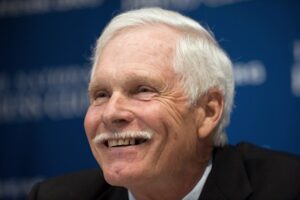
Ted Turner, the trailblazing media entrepreneur who revolutionised global broadcasting with the launch of the first 24-hour television news channel, CNN, has died at the age of 87.
His death was confirmed on Wednesday in a statement issued by Turner Enterprises.
Turner gained global recognition in 1980 when he founded CNN, introducing continuous, around-the-clock news coverage and fundamentally altering how audiences receive information worldwide. The network went on to become one of the most powerful and far-reaching media organisations.
“Turner’s vision changed journalism forever by making news immediate, global, and constant,” the statement from Turner Enterprises said.
Known for his bold personality and at times controversial approach, Turner expanded his influence beyond news into entertainment and sports. His ventures included the creation of channels such as Cartoon Network and Turner Classic Movies, while he also owned the Atlanta Braves, elevating the team’s national prominence.
“He was a once-in-a-generation media pioneer whose influence touched every corner of modern broadcasting,” a former CNN executive said.
In addition to his
business achievements, Turner was widely recognised for his philanthropy and environmental advocacy. He established the United Nations Foundation following a $1 billion pledge to support United Nations programmes and became one of the largest private landowners in the United States.His environmental initiatives also extended into public awareness, including wildlife restoration efforts and the development of the animated series Captain Planet and the Planeteers.
“He turned viewers into instant witnesses to history,” the magazine wrote at the time.
Turner later stepped away from day-to-day business operations after selling a significant portion of his media holdings to Time Warner, though he remained closely tied to CNN, often describing it as his most significant accomplishment.
In 2018, he disclosed that he had been diagnosed with Lewy body dementia and had experienced declining health in subsequent years.
“Ted was fearless in his ideas and relentless in pursuing them,” a longtime associate said. “He believed in his instincts when few others did.”
His passing marks the end of an era for a figure whose innovative vision reshaped modern journalism and the global media landscape.