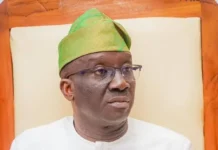
The Special Adviser to President Bola Ahmed Tinubu on Economic Affairs, Tope Fasua, has urged Nigerians to adjust their spending habits in line with their earnings amid mounting economic hardship across the country.
Fasua made the remarks during a members-only Coffee Hangout organised by Kay Hikers Club in Abuja.
A video from the event, shared on the group’s Instagram page on Thursday, captured a tense exchange between Fasua and a female participant who lamented the rising cost of living, worsening insecurity and declining purchasing power among Nigerians.
The attendee questioned the affordability of essential food items, noting that many households could no longer afford basic necessities.
“Are you aware that you can no longer buy tomato worth ₦500 from the market as you used to 10 or 15 years ago? Are you also aware that something as basic as food is now something people practically beg for?” she asked.
She also linked increasing street crime and insecurity to deepening poverty and poor wages earned by low-income workers.
Responding, Fasua argued that although prices had risen significantly, the situation was not beyond management if households adopted more disciplined spending habits.
“A modest family will feed for several days with ₦10,000,” he said.
He added that Nigerians needed to “cut their coat according to their cloth” and make more deliberate financial
choices.“You can go to the market. I go to the market too. I have customers in Utako market and Wuse market. I like shopping and I test things. You can still buy foodstuff and cook at home,” Fasua stated.
The presidential adviser maintained that government could not satisfy every public expectation and warned against what he described as sensationalising Nigeria’s economic challenges.
“I know things are expensive, more expensive than they were before. But if we want sensation, government will never win,” he said.
Fasua also rejected direct comparisons between Nigeria and foreign economies, insisting that local purchasing power should be the basis for judging living standards.
“We are not in the US. Everybody has to deal with his own currency. That’s what is called purchasing power parity. Ten dollars will go far in this country, but in the US you can do very little with it,” he added.
However, another participant challenged Fasua’s position, accusing him of downplaying the structural realities confronting Nigerians.
“I feel like you are beginning to spiritualise the issues in Nigeria when you say mindset, because it’s not actually supposed to be a mindset, it’s a reality,” the attendee said.
Fasua responded that while government policies influenced economic conditions, individuals still had a responsibility to adapt and build personal resilience despite broader national challenges.