

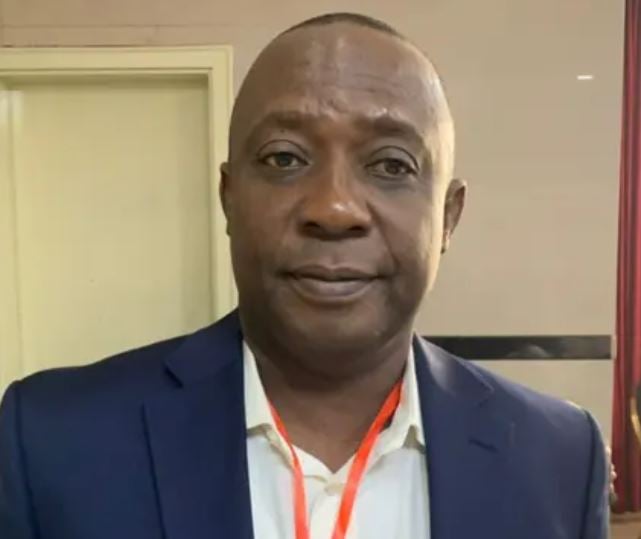

The Nigerian Guild of Editors (NGE) has called on President Bola Tinubu and the National Assembly to introduce urgent fiscal and legal reforms aimed at saving Nigeria’s struggling media industry from collapse.
Speaking at the 2025 All Nigeria Editors Conference (ANEC), held on Wednesday at the Presidential Villa, Abuja, the Guild’s President, Eze Anaba, warned that the survival of the nation’s democracy depends on a vibrant and independent press.
“Our democracy is tested by insecurity, economic hardship, misinformation and declining public trust,” Anaba told the audience, which included President Tinubu. “When the press thrives, democracy breathes; when the press is stifled, democracy suffocates.”
Citing Section 22 of the Nigerian Constitution, which empowers the media to hold government accountable, Anaba appealed for fiscal incentives and legal protection to strengthen press freedom and sustainability.
He unveiled a five-point rescue plan for the government’s consideration, including:
1. Corporate tax reliefs for five to ten years to help media houses stabilise operations.
2. VAT exemption on essential inputs such as newsprint, plates, and broadcast equipment.
3. Tax credits to encourage large corporations to advertise in credible Nigerian outlets.
4. Low-interest loans from the Bank of Industry or the Development Bank of Nigeria for equipment modernisation and job creation.
5. Establishment of a Media Development Fund for digital transition, managed independently to prevent political interference.
Anaba lamented the soaring cost of production, noting that a ton of newsprint now sells for ₦1.3m–₦1.4m, barely lasting two days in a typical print cycle.
“If the media cannot keep jobs by paying salaries,
The NGE President also called for a legal reset, urging the repeal of laws that hinder free expression and the adoption of a Media Freedom and Safety Charter endorsed by the Executive, Legislature and Judiciary to protect journalists from harassment and arbitrary arrests.
Framing the conference theme — “Democratic Governance and National Cohesion: The Role of Editors” — and sub-theme “Electoral Integrity and Trust Deficit: What Nigerians Expect in 2027”, Anaba reminded editors to act as “constructive partners, not adversaries,” in shaping national unity.
“The pen must never be a tool for division, but for healing and bridge-building,” he said, urging journalists to centre underserved communities and conflict-prone areas in national conversations.
Anaba traced ANEC’s journey from a modest idea in 2004 into Nigeria’s largest annual gathering of editors, media executives, and policy influencers. He also thanked the Presidency for recognising the media’s central role in democracy and urged journalists to embrace technology responsibly while upholding ethics and patriotism.
“A free, responsible and vibrant press is the lifeblood of any democracy,” Anaba concluded. “When journalists are respected, protected, and granted access to information, governance becomes more transparent, and citizens better informed.”
The 21st ANEC featured sessions on electoral integrity, countering misinformation, and the economics of independent journalism, drawing participants from the media, traditional institutions, and civil society.
More details to follow.
#PressFreedom #NGE2025 #Tinubu #MediaReform #NigeriaNews #JournalismMatters #DemocracyInNigeria #EditorsConference #GoodGovernance #ANEC2025
—