

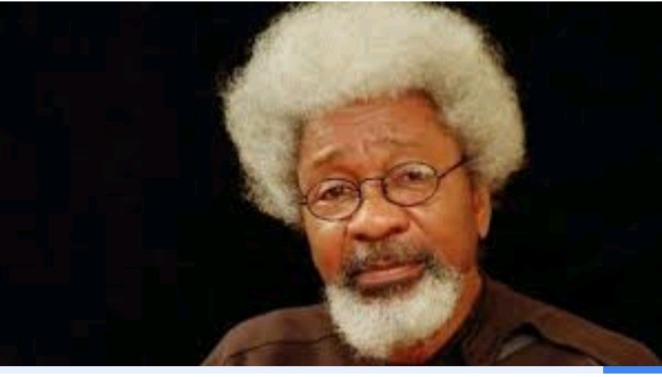

Nobel laureate, Professor Wole Soyinka, has revealed that the United States government has revoked his visa, temporarily preventing him from entering the country.
Soyinka made the disclosure on Tuesday during a media briefing at Kongi’s Harvest Gallery, Freedom Park, Lagos Island.
He explained that he had no prior knowledge of any infraction that could have led to such a decision.
“It is necessary for me to hold this conference so that people in the United States who are expecting me for this event or that event do not waste their time. I have no visa; I am banned, obviously, from the United States. And if you want to see me, you know where to find me,” he told journalists.
According to the literary icon, the US Consulate notified him of the development in a letter dated October 23, 2025. The document, issued by the Nonimmigrant Visa (NIV) Section of the Consulate in Lagos, stated that his visa had been revoked under existing US Department of State regulations.
“This letter serves as official notification by the United States Consulate General in Lagos that the nonimmigrant visa listed below has been revoked pursuant to the authority contained in U.S. Department of State regulations,” part of the letter read.
Soyinka, visibly puzzled by the move, said he had no criminal record and could not recall any incident that might have triggered the revocation.
“I’m still looking into my past history… I don’t have any past criminal record or even a felony or misdemeanour to qualify for the revocation. I’ve started looking back—have I ever misbehaved toward the United States of America? Do I have a history? Have I been convicted? Have I gone against the law anywhere?” he said.
The
reason behind the US government’s action remains uncertain. The development comes amid Washington’s recent tightening of immigration policies and increased scrutiny of visa holders.PM News had earlier reported on September 10, 2025, that Soyinka declined an invitation from the US Consulate in Nigeria to attend a visa re-interview slated for Thursday, September 11. The Consulate had invited certain Nigerian holders of B1/B2 visas—temporary permits for business or tourism—to participate in what it described as a “visa interview.”
Reacting at the time, Soyinka noted that he initially doubted the authenticity of the letter he received.
“I would like to begin by stressing the fact that, for me, this is not a personal issue. I have no idea how you got to know. By the way, I also received the letter, which at first I thought was fake. I thought it came from scammers who prey on those eager to get visas elsewhere, promising to deliver them for a certain amount. I thought they had simply picked my name among others, knowing there was a list of invitees.
“So, at first, I thought it was advance-fee fraud because I had never received that kind of letter from that or any other embassy. I even thought that maybe AI had been generating generic letters. It was very strange.
“So, by the time I came to terms with the fact that the letter was genuine, my mind went to my relationship with individual ambassadors, Consuls General, and Cultural Attachés. As you know, it has always been a courteous relationship,” he told PM News.
For now, the acclaimed writer remains uncertain about the future of his travels to the United States, as inquiries into the visa revocation continue