


In the heart of Lagos Island’s Broad Street, the imposing Afriland Tower — home to financial giants such as the United Bank for Africa, the Federal Inland Revenue Service (FIRS), and United Capital Plc — became a scene of horror on Tuesday afternoon when a devastating fire tore through the seven-storey building.
The blaze, which began around 1pm in the basement inverter room, spread rapidly, transforming the glass-fronted landmark into a choking death trap. At least 10 people lost their lives, with dozens more injured.
Panic, smoke, and desperate escapes
For survivors like Adewale, an office worker on the fifth floor, the nightmare began when the lights tripped and failed to return after more than 20 minutes.
“Suddenly we started seeing thick smoke. Everybody panicked. I soaked my tie in water and used it as a mask. The smoke was so dense we could not see anything. I just followed someone blindly and by God’s grace made it to the ground floor,” he recalled, still gasping for air at Avon Medical Hospital where he was treated for smoke inhalation.
Others were less fortunate. Survivors said many victims were trapped near the basement entrance where the fire started.
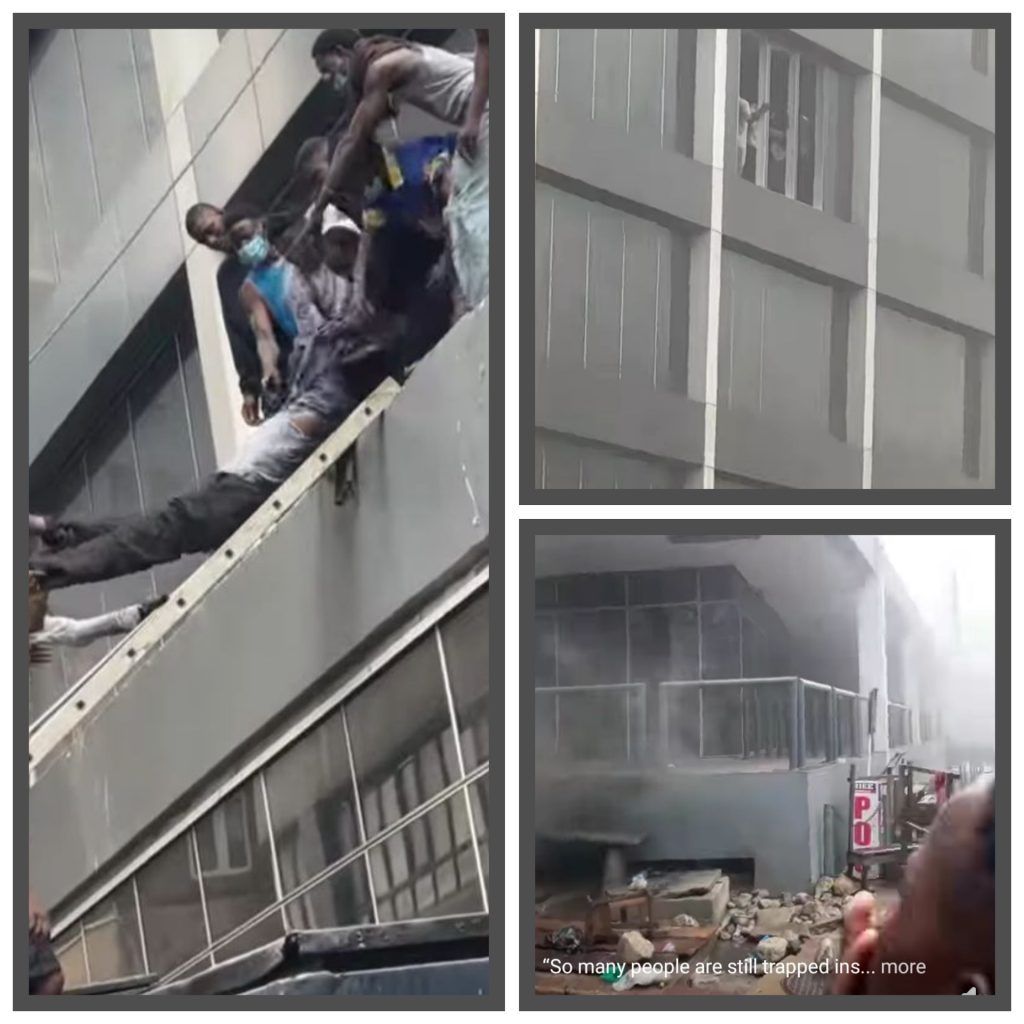
On the second floor, Kachi nearly suffocated before smashing through windows alongside others. “I almost passed out. We could not use the main entrance. People were climbing through broken windows, some using ropes. It was only God that saved me,” he said.
Lives cut short
The tragedy plunged organisations into mourning. Four FIRS personnel — George Faith Ekelikhostse (58), David Sunday-Jatto, Nkem Onyemelukwe (55), and Peter Ifaranmaye (48) — died while on duty.
Ekelikhostse, an Assistant Director with 32 years’ service, and Onyemelukwe, a Senior Manager of 13 years, were remembered as dedicated professionals. Sunday-Jatto, fondly called “Daddy Nicole,” left behind a young daughter.
At United Capital Plc, six promising staff members also perished, including
Jesutoni Shodipo (21), Opeyemi Oloyede (28), Kehinde Adeoye (36), Olumide Oyefodunrin (26), Ndidi Osaemedike-Okeke (41), and Rebecca Adenuga (28).Oyefodunrin, who would have celebrated his birthday the very next day, was buried just two days later. Adeoye, a young mother who had only recently returned from maternity leave, left behind a baby and grieving husband.
Tributes poured across social media, with friends and colleagues mourning “a sweet soul,” “the coolest colleague,” and “a mother full of life.”
Questions over safety
Eyewitnesses accused Afriland Tower’s management of negligence. Traders and visitors alleged that the building’s emergency alarms and exits were faulty, while a critical side staircase had been blocked during renovation.
“The last time there was a fire, everyone escaped through that staircase. They blocked it and now we’ve seen the result,” said trader Omolara Ogunsola.
First responders added that the inverter system had shown repeated faults in recent weeks, even exploding just days before the tragedy.
One rescuer, Fasasi Adeniyi, said: “They kept patching the system instead of replacing it. A pregnant woman was among the dead. She called her family from inside, saying she couldn’t get out. That was the last time they heard from her.”
Survivors escaped after smashing sealed glass walls, with traders and passers-by using ropes, ladders, and bare hands to help. One man leapt from the sixth floor but died instantly on impact.
Official response
President Bola Tinubu, First Lady Oluremi Tinubu, and Lagos State Governor Babajide Sanwo-Olu have all expressed grief and solidarity with victims’ families.
The President described the disaster as “a painful tragedy” and called for stricter safety standards in public buildings. Sanwo-Olu, while ordering a full investigation, praised the bravery of emergency responders and ordinary Lagosians who risked their lives to save others.
But for the grieving families, including the husband of the pregnant victim and the young child left motherless, the anguish is immeasurable.