



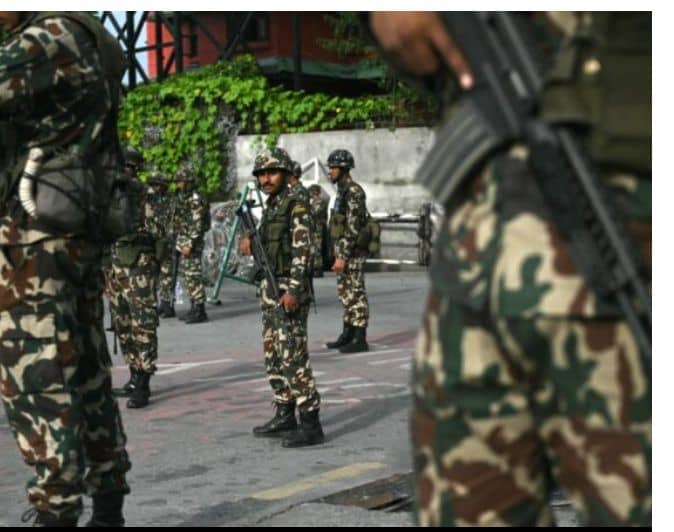

On Friday, President Ramchandra Paudel and army chief General Ashok Raj Sigdel began urgent talks with political figures and representatives of the youth-led “Gen Z” movement to agree on an interim leader capable of steering the country through the turmoil.
A Nation in Shock
The unrest began when authorities attempted to quash demonstrations by young protesters demanding an end to corruption and poor governance. What started as peaceful rallies spiralled into deadly violence, leaving at least 51 people dead—the bloodiest scenes since the abolition of Nepal’s monarchy in 2008.
By Tuesday, parliament and key government buildings were ablaze, a Hilton Hotel torched, and long-serving Prime Minister KP Sharma Oli forced to resign. The following day, the army imposed a curfew, reclaiming the streets of Kathmandu and other major cities.
The Search for Consensus
Among the names floated for interim leadership is Sushila Karki, 73, Nepal’s first woman chief justice. She has urged experts and political stakeholders to “come together to figure out the way forward”, while acknowledging that parliament still exists despite public fury.
But deep divisions remain. Youth activists, led by figures such as Sudan Gurung, are insisting that their “first demand is the dissolution of parliament”,
reflecting frustration with a system they view as irredeemably corrupt.Chaos on the Ground
The scale of disorder shocked the nation. More than 12,500 prisoners escaped during the chaos, and police say many are still at large. Looted weapons—including automatic rifles—have been recovered by the army.
Meanwhile, Kathmandu residents endured days under lockdown. “I was very afraid and stayed locked inside my home with family,” said Naveen Kumar Das, a painter-decorator, who dashed out to buy food when the curfew was briefly lifted.
Shops, tea stalls, and pharmacies were crowded with citizens rushing to restock, while fuel queues stretched along the capital’s tense but quiet streets.
Economic Desperation Fuels Anger
Underlying the protests are Nepal’s long-standing economic woes. With more than two-fifths of the population aged between 16 and 40, frustration is rife. A fifth of young people between 15 and 24 remain unemployed, according to World Bank figures, while per capita GDP stands at just $1,447.
For protesters like 24-year-old James Karki, hope lies in radical change. “We started this movement so we could make a better Nepal. And I am positive that the army will listen,” he said.
Uncertain Road Ahead
As President Paudel reassures the nation that “a solution is being sought as soon as possible”, Nepal faces a delicate balancing act: calming youthful discontent, filling its leadership vacuum, and preventing the fragile state from sliding further into chaos.