According to Nigeria’s National Security Adviser, Nuhu Ribadu, the arrests mark one of the most decisive breakthroughs in recent years. Both men had been linked to major terrorist attacks across Nigeria, including the Kuje Prison attack of 2022, where dozens of Boko Haram members escaped, and the 2013 assault on a uranium facility in Nigeria

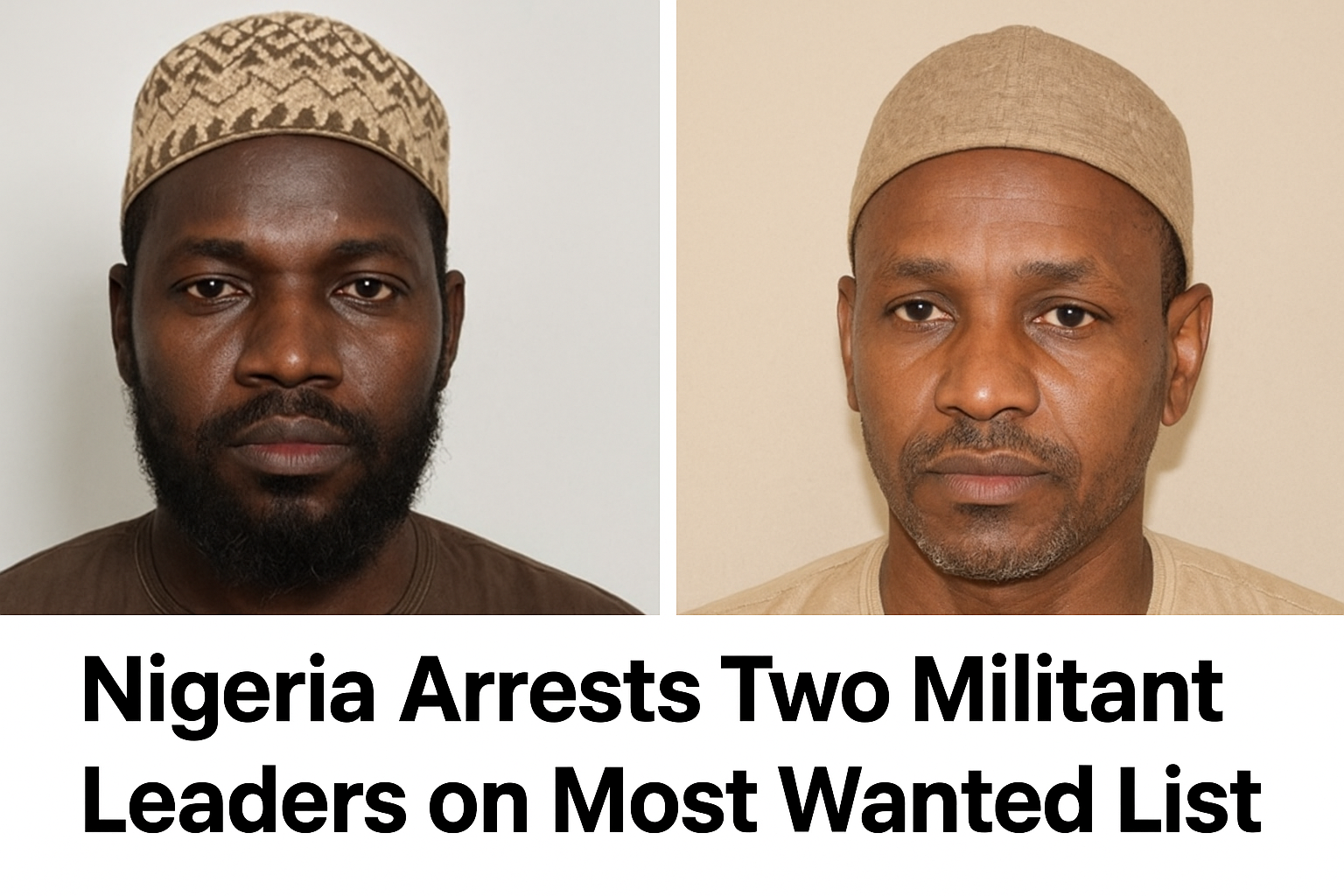
Lagos, Nigeria — In a major counter-terrorism breakthrough, Nigerian security forces have arrested two high-profile militant leaders who have been on the nation’s most-wanted list for several years. The operation, coordinated by multiple security agencies between May and July 2025, was confirmed on Saturday by the National Security Adviser, Nuhu Ribadu.
The captured figures are Mahmud Muhammad Usman, leader of the al-Qaeda-linked Ansaru faction, and Mahmud al-Nigeria, the head of the relatively new but increasingly violent Mahmuda group. Both men were also on international watchlists due to their suspected roles in cross-border terrorist activities.
According to Ribadu, the intelligence-driven operation led to the recovery of critical materials, including digital evidence now undergoing forensic analysis. Authorities believe this evidence could lead to additional arrests within and outside Nigeria.
“These two men have been on Nigeria’s most-wanted list for years. They jointly spearheaded multiple attacks on civilians, security forces, and critical infrastructure,” Ribadu told journalists during a press briefing in Abuja.
The security adviser further linked the duo to some of Nigeria’s most devastating terrorist operations in the last decade:
- The Kuje prison attack in 2022, which enabled dozens of Boko Haram members to escape.
- The 2013 assault on a uranium facility in Niger Republic, which raised international alarm.
- Several coordinated ambushes against troops and attacks on rural communities in Nigeria’s north-central region.
Ribadu added that both leaders have maintained “active links with terrorist networks across the Sahel and Maghreb, particularly in Mali, Niger, and BurkinaFaso.”
The Threat Landscape in Nigeria
Nigeria continues to face a complex security crisis, with multiple armed groups operating simultaneously. These include:
- Religiously motivated groups such as Boko Haram, its offshoot Ansaru, and the Islamic State West Africa Province (ISWAP).
- Bandit groups, notorious for mass kidnappings, looting, and extortion in rural communities.
- Smaller factions like Mahmuda, which gained notoriety earlier in 2025 after staging high-profile attacks in the north-central states.
Despite continuous military offensives, many of these groups have expanded their operations, often overlapping in methods and alliances. Boko Haram itself, though weakened, has shown signs of resurgence in recent months.
Global Support and Arms Supply
Nigeria’s international partners have continued to back its counter-terrorism efforts. Just last week, the United States approved the sale of $346 million worth of military equipment to strengthen Nigeria’s fight against insurgency and criminal networks.
Security analysts believe the arrest of Usman and al-Nigeria could mark a turning point if Nigeria fully exploits the intelligence gathered.
Analysts Weigh In
Oluwole Ojewale, a Dakar-based analyst with the Institute for Security Studies, described the arrests as “a significant decapitation of Ansari’s leadership structure.”
“The impact will depend on how Nigerian security agencies utilize the intelligence in their possession,” Ojewale noted. “If properly harnessed, this could prevent the groups from regrouping and carrying out major retaliatory attacks.”
Meanwhile, Ribadu emphasized that dismantling terrorist leadership remains crucial in Nigeria’s broader fight against insecurity. “This is the most decisive blow against Ansaru since its inception,” he declared, adding that the arrests could pave the way for “the complete annihilation” of the faction.
Looking Ahead
The arrests highlight Nigeria’s determination to restore peace across its troubled northern and central regions. However, observers caution that until root causes like poverty, unemployment, and porous borders are addressed, extremist groups may continue to find fertile ground for recruitment and operations.
For now, the capture of two long-sought militant leaders offers both relief and hope that the tide may finally be turning in Nigeria’s war against insurgency.
📢 Share Your Thoughts
Do you think the arrest of these militant leaders will significantly reduce insecurity in Nigeria, or will new leaders simply emerge to replace them?
👉 Share your views in the comment section below and don’t forget to spread this story across your networks to keep the conversation alive.