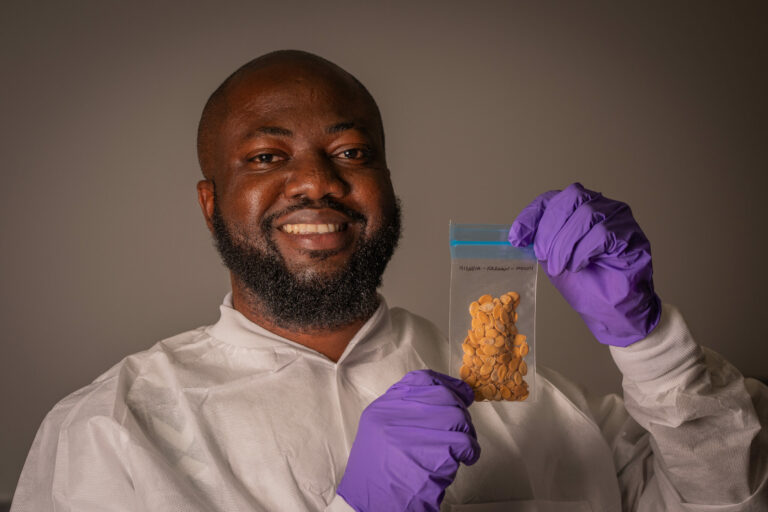

During a live interview on Channels TV on Friday, Dr Oniosun explained why egusi was selected over other beloved Nigerian ingredients like ogbono or fisherman soup. He pointed to the deep cultural symbolism and wide national appeal of egusi as the defining factor behind the decision.
“I think personally, and this is a personal story, egusi is the most cultural dish in Nigeria,” he said. “Everybody eats egusi. The Yorubas lay claim to it, saying it originated from them. The Igbos also do the same. So, a lot of people identify with it. I don’t think there’s a better dish that says, ‘I’m Nigerian,’ than egusi. Even in the diaspora, people connect to it.”
Dr Oniosun noted that this launch marks just the beginning of a broader initiative in
space-based agriculture. According to him, more Nigerian foods and biological samples will be sent to space in the future as part of ongoing research into crop viability in extraterrestrial environments.“This is the first stage of this experiment,” he said. “We’re going to send more stuff to space. So, for people curious about other soups, other seeds, we’ll be sending more.”
In a light-hearted moment during the interview, when asked if the project could potentially serve extraterrestrial beings, Dr Oniosun didn’t rule out the possibility.
“I mean, yeah, that’s a possibility,” he said. “Some people are asking what would happen to the seed. We don’t know—maybe we’ll bring it back and plant it, and it’ll germinate something else. That’s why we’re doing these experiments. It’s all very exciting.”
The egusi experiment explores the resilience of the seed under microgravity and harsh space conditions. Scientists hope to assess its potential for cultivation beyond Earth, especially in future space habitats.
This achievement places Nigeria on the global map of space-based agricultural research and showcases the intersection of culture, science, and innovation.