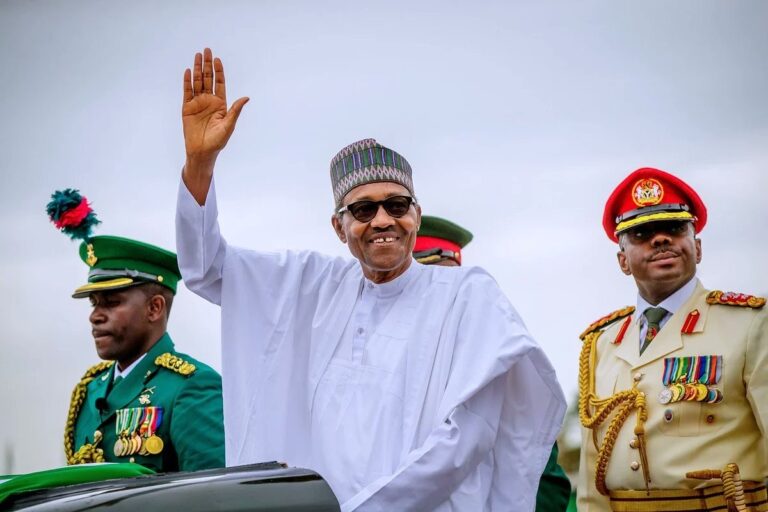

The body of former Nigerian President Muhammadu Buhari was laid to rest in his hometown, Daura, Katsina State, on Tuesday, 15 July 2025, in a solemn and symbolic farewell that resonated across the nation.
The funeral rites were conducted in line with Islamic tradition and were led by the Chief Imam of Katsina, shortly after the Asr (evening) prayer at 5:50pm. With dignitaries and mourners from all walks of life in attendance, the interment marked the final chapter in the life of one of Nigeria’s most influential and controversial political figures.
Earlier in the day, the late president’s remains arrived at Umaru Musa Yar’Adua International Airport aboard a Nigerian Air Force aircraft, flown in from London, where he died on Sunday, 13 July, aged 82, after a prolonged illness. Accompanying the flight were Vice President Kashim Shettima and a retinue of senior officials.
The casket, draped in green and white, was airlifted by helicopter to Daura, drawing crowds that lined the streets with tears and prayers, desperate to glimpse their revered native son one last time. A heavy but respectful atmosphere engulfed the town as chants of prayer filled the air.
In a striking gesture of honour, senior military officers and service chiefs bore the casket to the graveside, followed by a 21-gun salute—a final tribute from Nigeria’s armed forces to a man who once served as their commander-in-chief both in uniform and in democracy.
President Bola Ahmed Tinubu, who had
earlier declared a national public holiday, personally received the remains at the airport before proceeding to Daura with other dignitaries. He was joined by state governors, ministers, and two former Nigerian leaders who attended the brief but deeply emotional interment at Buhari’s private residence.The town of Daura, wrapped in black and silence, had become a focal point of mourning. Locals, who had known Buhari not only as a national figure but as a neighbour, stood quietly under the sun, holding Qur’ans, praying and weeping.
“He lived simply and died with dignity,” said Ismaila Ibrahim, a long-time neighbour. “Even as president, he never lost touch with Daura.”
Despite tight security, commercial activity in the town slowed only slightly, as thousands continued to visit the family home, where relatives—many in tears—received sympathisers into the night.
The former president’s passing has prompted tributes from across the globe. From African leaders to Western diplomats, Buhari was remembered as a disciplined leader, a nationalist, and a man of deep conviction who left an indelible impact on Nigeria’s governance and security landscape.
Buhari’s legacy remains a subject of national debate, but for the moment, the mood is collective: a pause to honour a man who gave decades of his life to public service.
As the sun set over Daura and the final earth was laid upon his grave, the country united, if only briefly, in reflection and farewell.