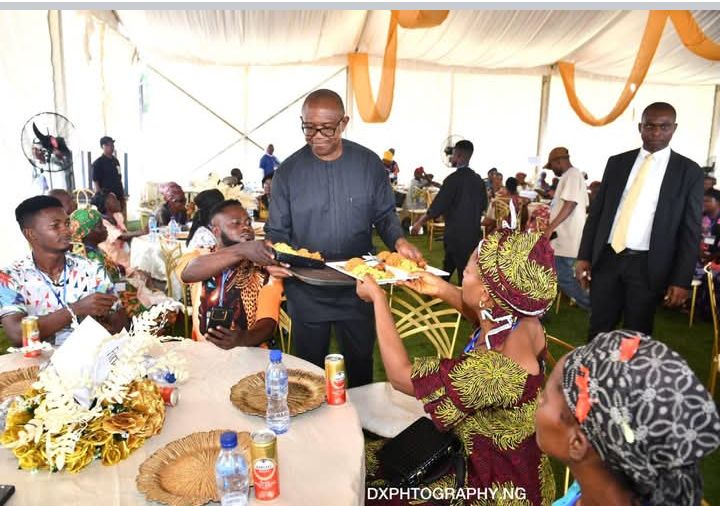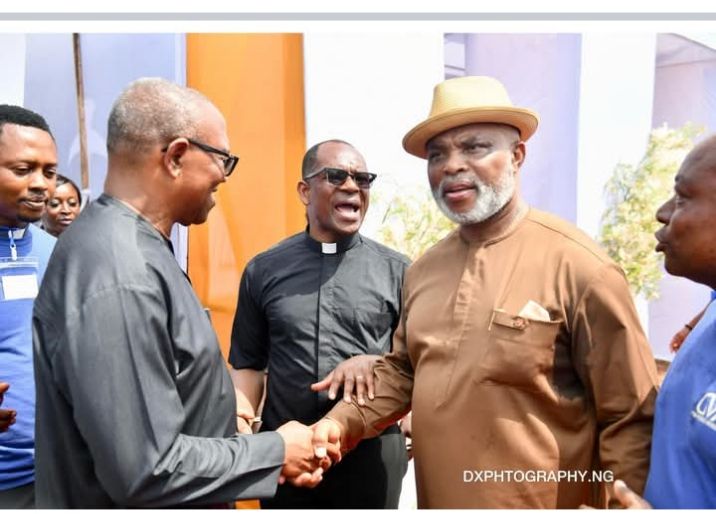
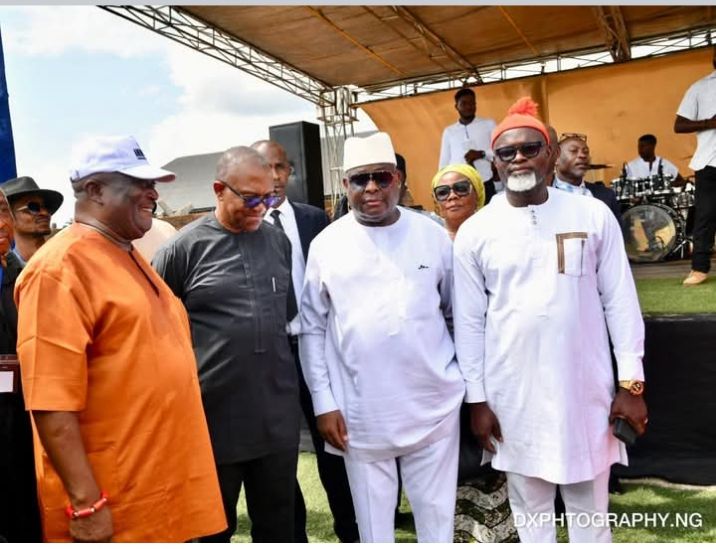
The event, which was intended to be a private service initiative, has since generated significant interest and debate, particularly after third-party photos and videos surfaced online.
“It’s sounding strange that I was seen serving food to people. Let me be clear, that event was not about me. It was called the Jubilee of Hope, and its purpose is straightforward, to remind us all that true leadership is service, and that those who have must never forget those who do not,” Obi said.
Clarifying the circumstances, Obi emphasized that neither he nor his team publicized the event or invited media coverage. He expressed disappointment over attempts by “naysayers and paid agents” to politicize what he described as a sincere act of service.
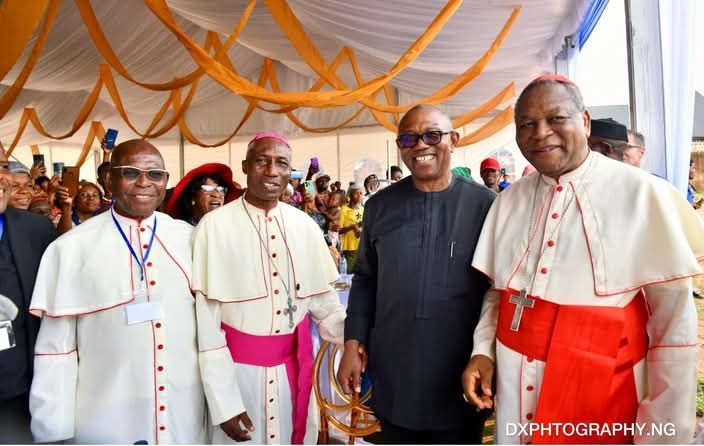
Obi reiterated the core philosophy behind the event, describing it as a symbolic but necessary act of humility aimed at redefining societal values.
“The Jubilee of Hope is designed for the rich to come down from their high places, even if just for a moment, and serve the poor, not as a show, but as a symbol of the society we must build. A society anchored on empathy, equity, and responsibility,” he said.
He was not alone in the act of service.Several notable figures also participated, including Cardinal John Onaiyekan, Senator Osita Izunaso, former Seplat Plc Chairman Dr. A.B.C. Orjiako, and others who, according to Obi, did so “quietly and sincerely.”
“It wasn’t about the cameras; it was about conscience,” he added.
Obi expressed surprise that what he viewed as a simple act of service had become the subject of national discussion. He explained that his approach to humility and service has always been consistent, both in public office and in private life.
“I am genuinely surprised that this simple act has become a topic of discussion. As Governor, I always served others whenever we had events. Even now, in private life, I do not have a house help. When guests visit my home, I serve them myself. I live simply, I sweep, I clean, because for me, humility is not a campaign strategy; it is a way of life,” he said.
He noted that he remained longer at the event only because several attendees requested to be served by him personally.
“At the Jubilee of Hope, I stayed longer because many of the poor attendees requested that I serve them personally. I could not ignore them. That was the only reason. Otherwise, there was nothing special about what I did. Service is not special, it is expected,” he asserted.
Calling for a deeper cultural shift, Obi urged leaders and citizens alike to embrace a lifestyle rooted in service, empathy, and collective responsibility.
“We cannot speak of building a New Nigeria while ignoring the hungry, the forgotten, and the poor. Events like this must not remain symbolic, they must become cultural. Public office holders, business leaders, and everyday citizens must unite in lifting others,” he concluded.
He ended his remarks with a call to action: “Let us work together to build a country where hope is not seasonal, and dignity is not a privilege, but a right. A New Nigeria is POssible.”