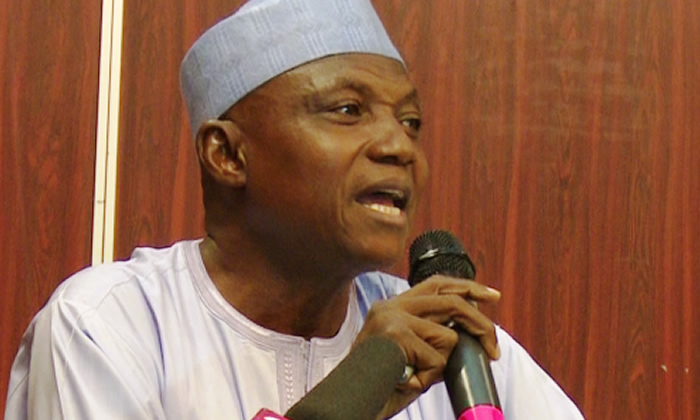
According to Shehu, the story was a deliberate fabrication aimed at diverting public attention from President Buhari’s health problems at the time.
This revelation is contained in his newly launched book titled “According to the President: Lessons from a Presidential Spokesperson’s Experience”, unveiled on Tuesday in Abuja.
In Chapter 10, pointedly named “Rats, Spin and All That”, Shehu provides an insider account of how the narrative was crafted amidst growing national and international concern over Buhari’s extended medical stay in the United Kingdom. The president had been away for nearly three months, and doubts about his health—and even his identity—began to swirl.
President Muhammadu Buhari returned to Nigeria on 19 August 2017, after undergoing prolonged medical treatment abroad. His absence had fuelled conspiracy theories, the most prominent being a claim by the Indigenous People of Biafra (IPOB) leader, Nnamdi Kanu, who alleged that Buhari had been replaced by a clone named Jibrin from Sudan.
Upon his return, the Presidency announced that the president would be working from home instead of his official office at Aso Rock. This, according to Shehu, intensified public scepticism.
Shehu recalls that shortly after Buhari’s return, during a casual discussion in the office of the Chief of Staff, someone mentioned that a cable had been damaged, possibly by rats, due to the office being unused for months. Seizing the opportunity to steer the conversation away from Buhari’s health, Shehu decided to offer that explanation to the press.
“When the surge in calls for explanation came, I told reporters that the office, which had been in disuse, needed renovation because rats may have eaten and damaged some cables,” he wrote.
What began as a speculative comment rapidly evolved into a full-blown media storm. Major international outlets, including BBC World News, ran the storyprominently. Reporters bombarded Shehu with queries—some even asked about the species of rats capable of eating cables in the Presidential Villa.
To sustain the distraction, Shehu jokingly referred them to the “mysterious rats” that allegedly invaded Nigeria in the 1980s during the infamous rice armada episode. These rodents, he claimed, were known to devour anything in their path.
While the spin was widely ridiculed and viewed by many as a poor attempt to cover up a serious national issue, Shehu maintains that it achieved its purpose: diverting the conversation.
“At a later meeting, the Minister of Information, Alhaji Lai Mohammed, and Vice President Prof Yemi Osinbajo asked me why I went that route. I told them it was deliberate,” Shehu wrote.
“They disagreed with me, saying it was well off the mark. But in my view, that spin succeeded.”
The rat story quickly became a national joke, sparking memes and criticism. But it also highlighted the power of media narratives, and how fragile trust in government communication can be when truth is sacrificed for expediency.
The disclosure has reignited public discourse about transparency in leadership and the role of media aides in shaping national perception. Many Nigerians on social media have expressed both outrage and amusement over the revelation, with some demanding accountability and others simply remarking, “We always knew.”
As Buhari’s presidency continues to be examined in hindsight, Garba Shehu’s candid memoir offers not just political insights but a vivid look at the PR machinery behind power—and the lengths it can go to control the national conversation.
Garba Shehu’s admission is a sobering reminder of the intersection between politics and propaganda. While spin may offer temporary relief from
uncomfortable truths, it rarely stands the test of time. The real question is no longer whether rats chewed wires in the Villa, but how many other national narratives were crafted in similar fashion—and at what cost?