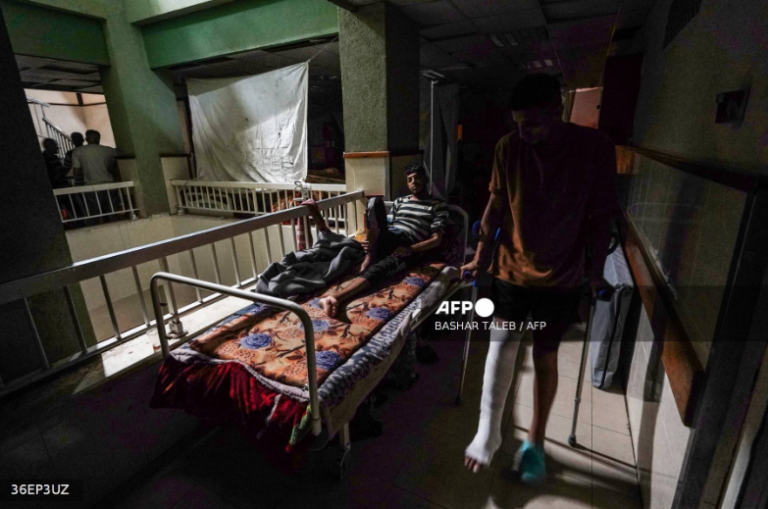
Kamal Adwan Hospital in the northern Gaza Strip is one of the few hospitals still operating. However, it is struggling to provide basic services due to the fuel shortage. Doctors are using mobile phone torches to navigate the dark corridors, and patients are being treated in dimly lit rooms. Ayman Zaqout, a patient being treated for renal colic, was lucky to receive treatment at all. He arrived at the hospital after navigating through Israeli strikes and evacuation orders. However, he soon discovered that the hospital was struggling to cope with the fuel shortage.
The hospital’s doctor, Mahmoud Abu Amsha, explained that international organizations have stopped providing fuel for the generators. This has forced the hospital to stop taking in new patients. The fuel shortage is not only affecting the hospital’s ability to treat patients but also putting lives at risk. Children in incubators are in danger of cardiac arrest and death, and seven patients in the intensive care unit are also at risk of dying due to the fuel shortage.
The war in Gaza began in October 2023, when Hamas launched an attack on southern Israel, killing 1,199 people, most of whom were civilians. Israel responded with a military campaign that has killed over 40,000 Palestinians, according to the Gaza health ministry. The UN rights office reports that most of the dead are women and children.
Gaza’s 2.4 millionpeople have been severely affected by the war. Nearly all of them have been displaced at least once, and only 16 hospitals are still functioning, all of them partially. The fuel shortage has made it difficult for hospitals to operate, and many are struggling to provide basic services.
In the first days of the war, Gaza’s only power plant stopped working, and Israel cut off the electricity supply. Fuel has been trickling in through Israeli-controlled checkpoints, but it is not enough to meet the demand. Hospitals are struggling to cope with the shortage, and patients are paying the price.
At Kamal Adwan Hospital, doctors can use solar energy to respond to major emergencies, but it is not enough to power electrical equipment 24 hours a day. The lack of fuel is also making it difficult to operate ambulances, putting even more lives at risk.
Al-Awda Hospital, also in northern Gaza, is waiting desperately for a fuel delivery to restart its generators. The hospital’s acting director, Mohammed Salha, explained that they have been forced to close some services and postpone operations due to the fuel shortage. This has put the sick and wounded at risk.
The hospital has been providing minimal services thanks to donations of fuel from other hospitals. However, this is not a sustainable solution, and the hospital is in urgent need of a steady fuel supply.
The situation in Gaza’s hospitals is critical, and the fuel shortage is putting lives at risk. International organizations and governments must act urgently to address this crisis and ensure that hospitals have the fuel they need to operate. The people of Gaza have suffered enough, and it is time for the international community to step in and provide the necessary support.