Political systems underpin economic success. Tinubu is making a mistake by reordering the system.
Nigeria took a dangerously wrong turn with the January 1966 coup that overthrew the First Republic. Since then, a pluralistic country has been foolishly mimicking a unitary polity. That is the road to perdition. With no conscious official effort to return to the ideals of federalism, the outcomes are devastating economically and politically.
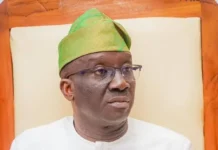
Since he took power in May 2023, Tinubu has been flailing against economic headwinds. He cancelled petrol and electricity subsidies and floated the naira to no avail. Instead, 10 days of #EndBadGovernance and hunger protests vividly brought home the magnitude of Nigeria’s economic mess.
Ogun Community Where Flood Sweeps Away Students…
Despite Tinubu’s economic reform, the currency lost 68 per cent of its value by February. It exchanges around N1,600 to $1 now from N465/$1 pre-Tinubu. Multinationals are leaving; power generation is at 5,000 megawatts; the infrastructure deficit is at N17 trillion per the Chartered Institute of Personnel Management of Nigeria.
Shortly after Tinubu was declared the winner of the 2023 presidential ballot, Nobel laureate, Wole Soyinka, presciently argued that Tinubu would fail in his economic undertakings ifhe stalled restructuring Nigeria first.
Indeed, Nigeria’s problems predate Tinubu. It is worse that the President is toeing the same narrow line as his predecessors. When they win office, they turn their back on restructuring. That is shortsightedness. Tinubu’s government went a step further by instigating the Supreme Court to grant financial autonomy to local governments, turning the principle of the centre and the federating units on its head.
Long before he won office, Tinubu was renowned for advocating restructuring. He created 37 local council development authorities as Lagos governor (1999-2007). In 2017, Tinubu said, “Things will be in a constant state of disequilibrium and irritation if the clamour and calls for restructuring are not heeded.” Due to political exigency, Tinubu has turned full circle on restructuring. This is absurd.
It is unwise to think the 1999 Constitution can instigate economic revival. Kingsley Moghalu, a member of the Patriots, captured it succinctly: “Nigeria today appears rudderless, with no particular direction. Our country has no purposeful destiny that we can say with conviction is our lodestar. Our citizens are increasingly unsure of what being a Nigerian means.”
Nigeria is more divided than ever today since the Civil War ended in 1970. The Federal Government is too powerful with 68 items in the Exclusive Legislative List. In the other 24 federal constitutions globally, power is devolved with fiscal federalism and policing decentralised. In the US, the LGs are under the control of states. For a multicultural polity, federalism is the best system.
Therefore, Tinubu should summon the political guile to initiate Nigeria’s restructuring rather than play games with spurious financial autonomy for LGs.