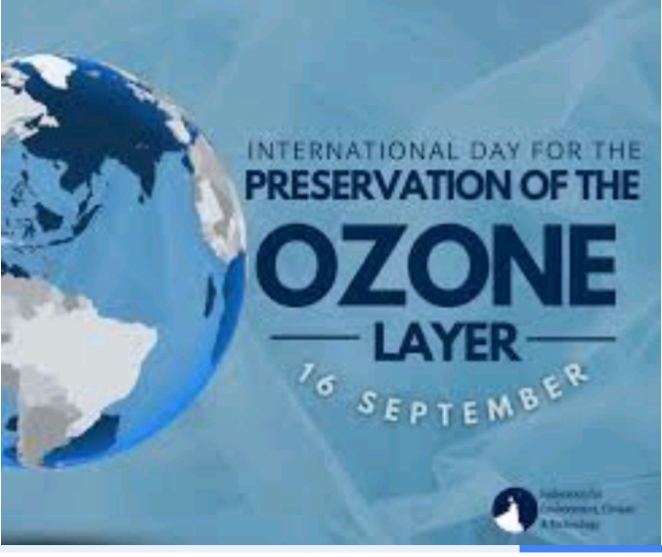
The states include Lagos, Rivers and Borno, according to environmental experts and stakeholders who convened in Benin City on Tuesday for the 2025 International Ozone Day commemoration.
The event, themed “From Science to Global Action”, was hosted by Save The Ozone Nigeria in partnership with the Federal Ministry of Environment, State Ministries of Environment, and the National Centre for Energy and Environment (NCEE) of the University of Benin.
The programme brought together key environmental advocates, scientists, and government officials to raise awareness about ozone protection and the dangers of its ongoing depletion.
Chairing the occasion, Professor Anthony Ogbeibu emphasized the growing urgency of maintaining and strengthening Nigeria’s environmental policies in light of new scientific data.
“Nigeria must sustain its policies on the ozone layer because recent scientific research shows that ozone depletion and exposure to erythemal UV radiation (EUVR), affect Nigeria more than many places. So we are not isolated from this global threat,” he said.
Ogbeibu further pointed out that UV radiation levels in Borno, Rivers, Abuja, and Lagos often spike to extreme levels around midday, particularly during the dry season and early rains, posing serious health risks even during brief exposure without adequate protection.
Hestressed the importance of public education on UV-related dangers and the adoption of protective measures. “We must support clean technologies by enforcing existing laws more strictly and ensuring that ozone-depleting substances are not imported or used illegally,” he urged.
Representing the Minister of Environment, Balarabe Lawal, Mr. Osagie Edomwandagbon noted in his keynote address that the federal government has been actively engaged in ozone protection efforts through various awareness campaigns and policy implementations.
Dr. Emmanuel Ogbomida, Acting Director of the National Centre for Energy and Environment, stated that the Energy Commission of Nigeria and its associated research institutions have been working in line with global objectives aimed at ozone preservation.
According to Ogbomida, “The ozone hole is shrinking and experts project that the ozone layer will return to pre-1980s level between 2060 and 2070,” but he warned that this progress could be reversed if vigilance and commitment are not maintained.
Earlier in his welcome remarks, Executive Director and Founder of Save The Ozone Nigeria, Ozaveshe Balogun, applauded all participants for their continued support of the environmental cause. He acknowledged that the annual event draws its legitimacy from the Montreal Protocol, which he said provided a global framework for protecting the environment.
During the ceremony, awards were presented to various individuals and organisations in recognition of their contributions to the protection of the ozone layer.